In this journal series, we will be evaluating the potential outcomes for cryptocurrencies as a whole and then for the top cryptocurrencies individually. As will be explained below, not all cryptocurrencies are created equal and their performance will very likely differ significantly.
2020 Global Recession
Let’s start off by looking at legacy markets and gauging where the economy is and reviewing whether or not COVID-19 triggered a recession, or not yet. A very simple parameter is the prominently used 200MA on the weekly timeframe for the S&P500.
[caption id="attachment_15140" align="aligncenter" width="1990"]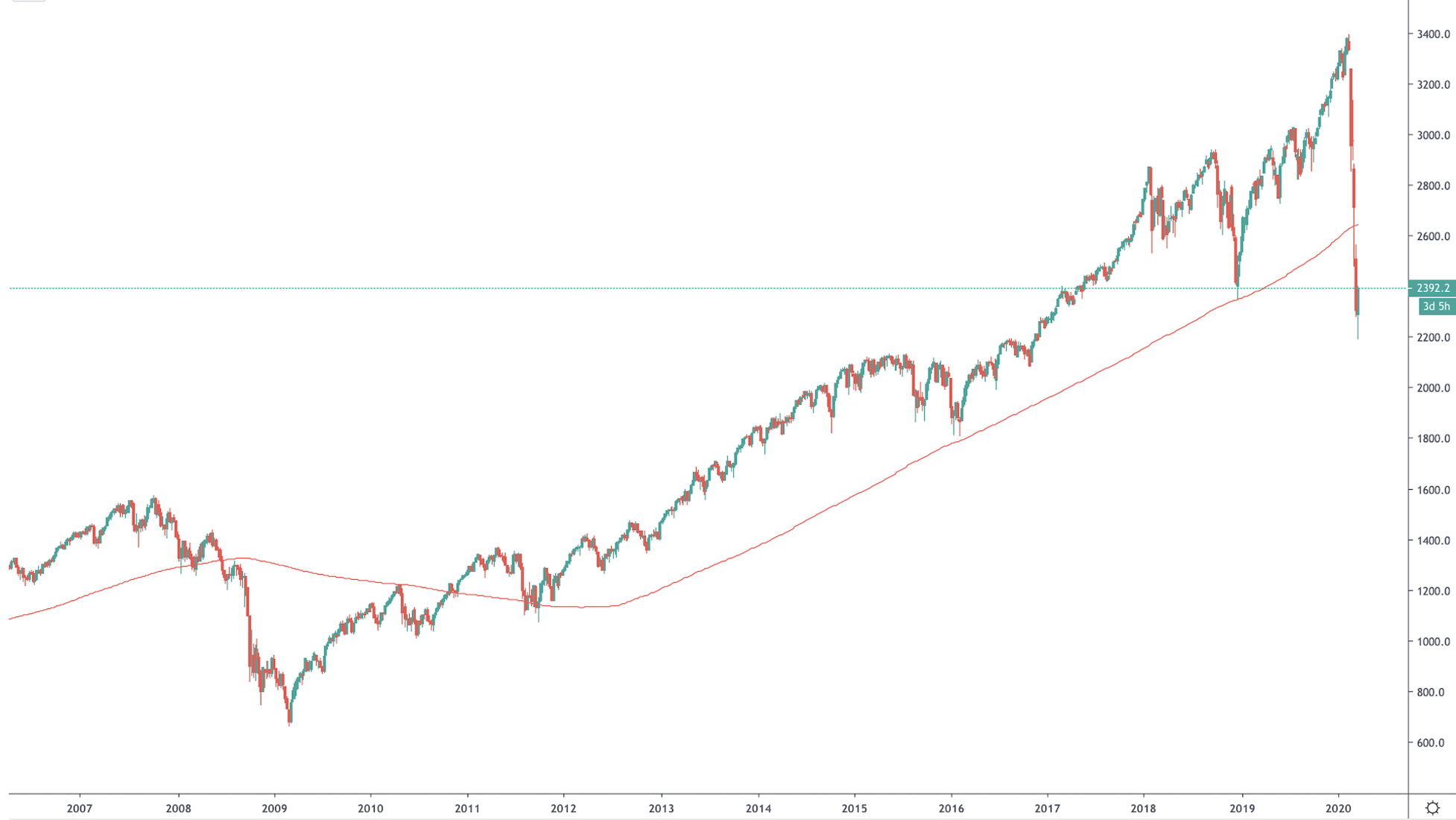 S&P500 [1W][/caption]
Any movement below this moving average is seen as “recession territory”. In fact, the 2019 correction was immediately reversed by it and the last time we saw its break was over a decade ago with the 2008 housing crisis.
The latter also shows that since Bitcoin’s inception, cryptocurrencies have not once experienced a recession environment. During the industry’s lifespan, the US GDP has risen from -1.73% in 2009 to 3.138% in 2017 while unemployment saw a 6% drop from a high of 10%. But what happens when this unemployment rate reaches 30% as predicted by James Bullard? Will people be throwing the little money they have for survival onto crypto? Will the investors who experienced a massive downfall invest their hard-earned capital in decentralised assets?
Liquidity Crunch
When the pandemic hit the markets and a massive panic sell-off began, we saw an almost synchronized downside move in equities, commodities and cryptocurrencies. The main surprise for people was the gold drop as it is perceived as a safe haven asset in times of uncertainty. At the time we had explained that the selling volume originated from futures platforms which indicated that investors desperately needed to get cash on hands in order to avoid liquidations and had to sell anything they could get their hands on, including gold and even bitcoin. That event of “cash desperation” is what’s called a liquidity crunch
Monetary Policy
Central banks from around the globe stepped up and offered stimulus packages, with the strongest being from the US Federal Reserve for an “Infinite QE”. The best case these packages can do is help stop the heavy bleeding and initiate a period of recovery, certainly not a reversal. The effects of the pandemic will remain and will be felt for a long-time unfortunately.
2008 Housing Bubble
During the last recession, we saw a similar sell-off act from gold and equities in the liquidity crunch phase. It was only when the bleeding stopped that gold went on a multi-year 150%+ bull-run.
[caption id="attachment_15141" align="aligncenter" width="2880"]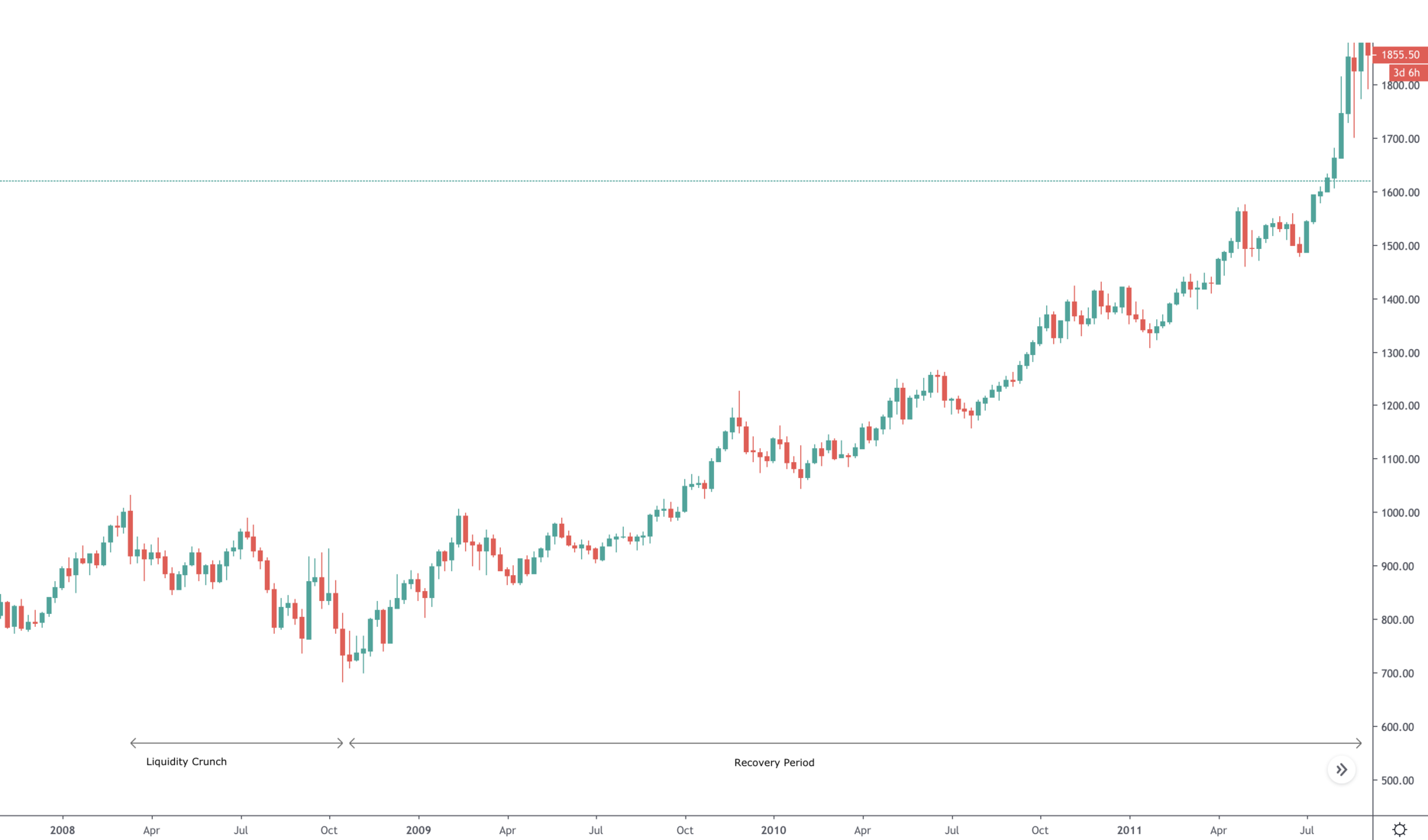 Gold [1W][/caption]
That is the role of a safe haven asset and expectations are the same for cryptocurrencies. In fact, even the Financial Times released an article in 2019 titled “A US recession could fuel a new cryptocurrency boom and bust”.
The Twist
To every story there is a plot twist, this one is no different. While we expected cryptocurrencies to fare well in a recession recovery environment, that will likely not be the case for all crypto-assets. With over 2,000 assets on the market (and counting), there is a countless number of useless projects or blockchain projects that do not necessitate a publicly-traded asset.
The days of speculation where assets simply grow for being “part of the industry” are over, we are entering the era of stress-testing value propositions. If an asset has no intrinsic value it’ll get squashed in this environment. For that reason, we will be covering the top crypto-assets by market capitalisation in the coming days in the next parts of this series to evaluate their intrinsic value and their probable performance in a recession environment.
Recommended from Cryptonary